As is usually the case, it seemed as if we had barely arrived when we were looking back on a completed week of ministry and forward to a day of exploring Antigua, the former capital of Guatemala and second oldest city in Central America. Nury had a full and fascinating day planned for us. As the bus rolled toward our first stop, she explained that the first Colonial-era city had been destroyed by a landslide in 1727, when an earthquake had cracked the crater of the El Agua volcano, spilling the contents of its lake and tons of earth and rocks onto streets and structures. (El Agua is long dormant, with communication towers now sprouting from its peak.) The cobblestone streets of the “new” old city would lead us to many intriguing sites over the next few hours.
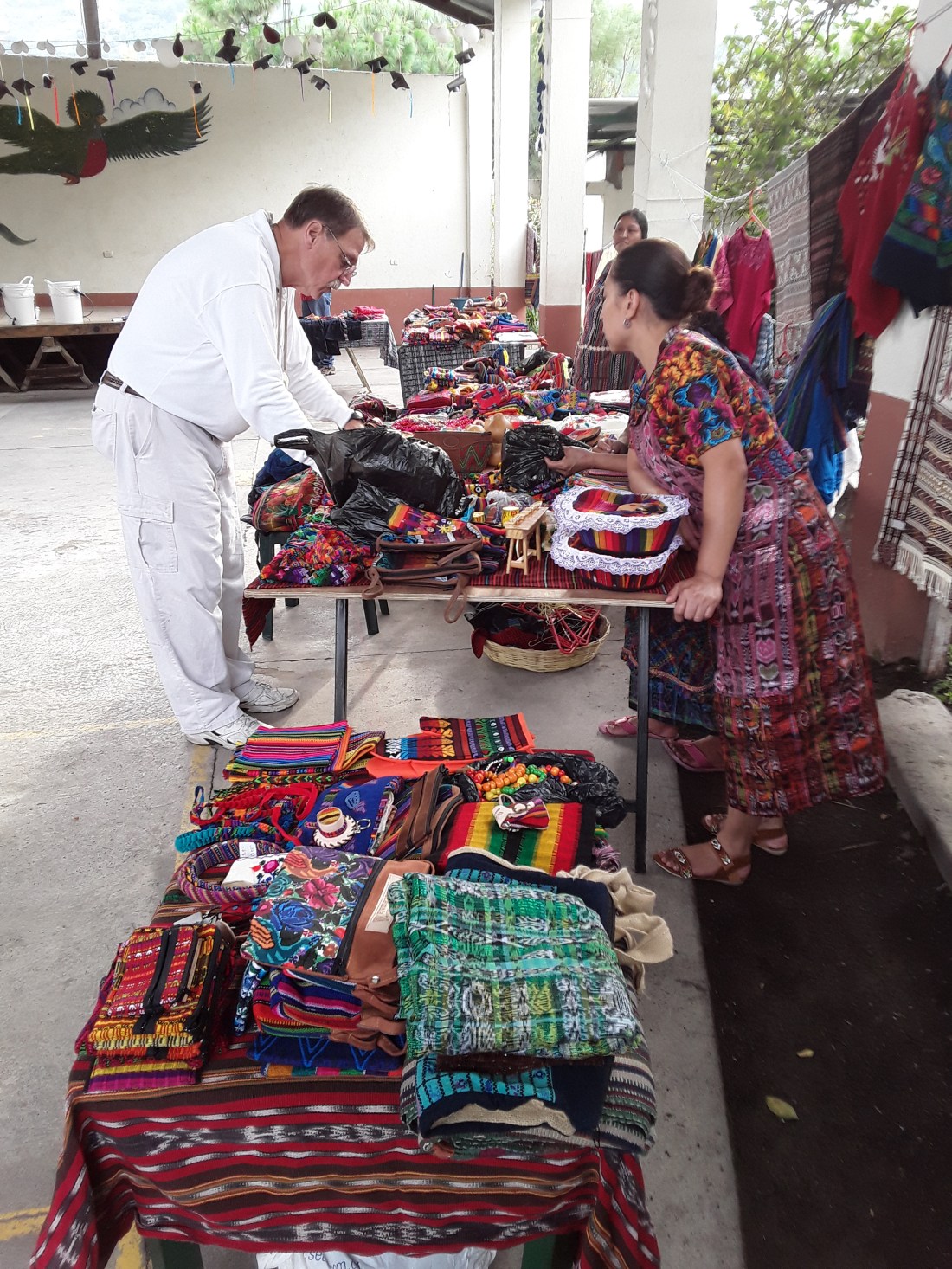
The Finca Colombia coffee plantation, where most of us had already placed orders, was first. Brilliant sunshine, dislays of colorful woven goods, and bright red poinsettias created an inviting scene, but we did not stay long. High on the mountainside above the city stands a tall cross, which one may approach by road or by 300-plus steps. We went by the road and walked down the steep hillside to the foot of the cross, marveling at the panorama of the city below. Then, aware that busloads of tourists from cruise ships would soon descend upon the city, Nury took us to the cooperative artisan market for an hour of shopping. The tight lanes and stuffed stalls produced sensory overload, but most of us found things to purchase before crossing the street for lunch at Pollo Campero. Shopping opportunities followed us, however, as vendors pursued us with various wares.
The chocolate museum introduced us to new ways to enjoy a favorite treat, and then the jade factory and museum educated us about the place of jade in the Mayan culture ( jade beads on your teeth, anyone?), kinds of jade, and the process of cutting it. After time to browse the jewelry cases, we proceeded to City Hall, where our sweet translator Ximena’s grandfather serves as secretary to the mayor. The Colonial-era building is fascinating, and it offers many picturesque vistas of the plaza below. We then explored the Cultural Center that is housed in a former convent. From an ancient public toilet to ornate pottery vessesl to workmen restoring the building it offered much to see.
Yes, thanks to Nury’s expert guidance, we really did see and do all that in one day. Then came the spectacular finale: dinner at a mountaintop restaurant with breathtaking views, reached by a series of equally breathtaking switchbacks. Our wonderful driver, Edgar, really proved his skill taking us up there and back! We topped off delicious meals with luscious hot chocolate, recommended by our translator Diego.
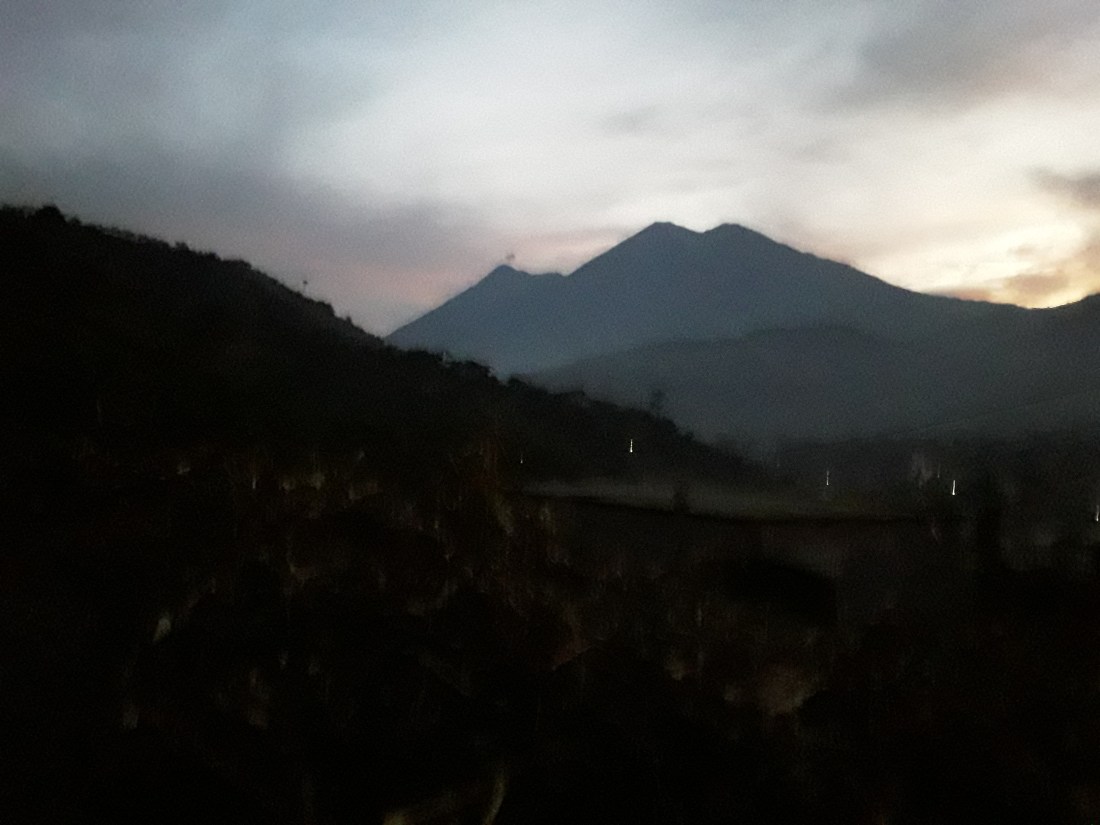
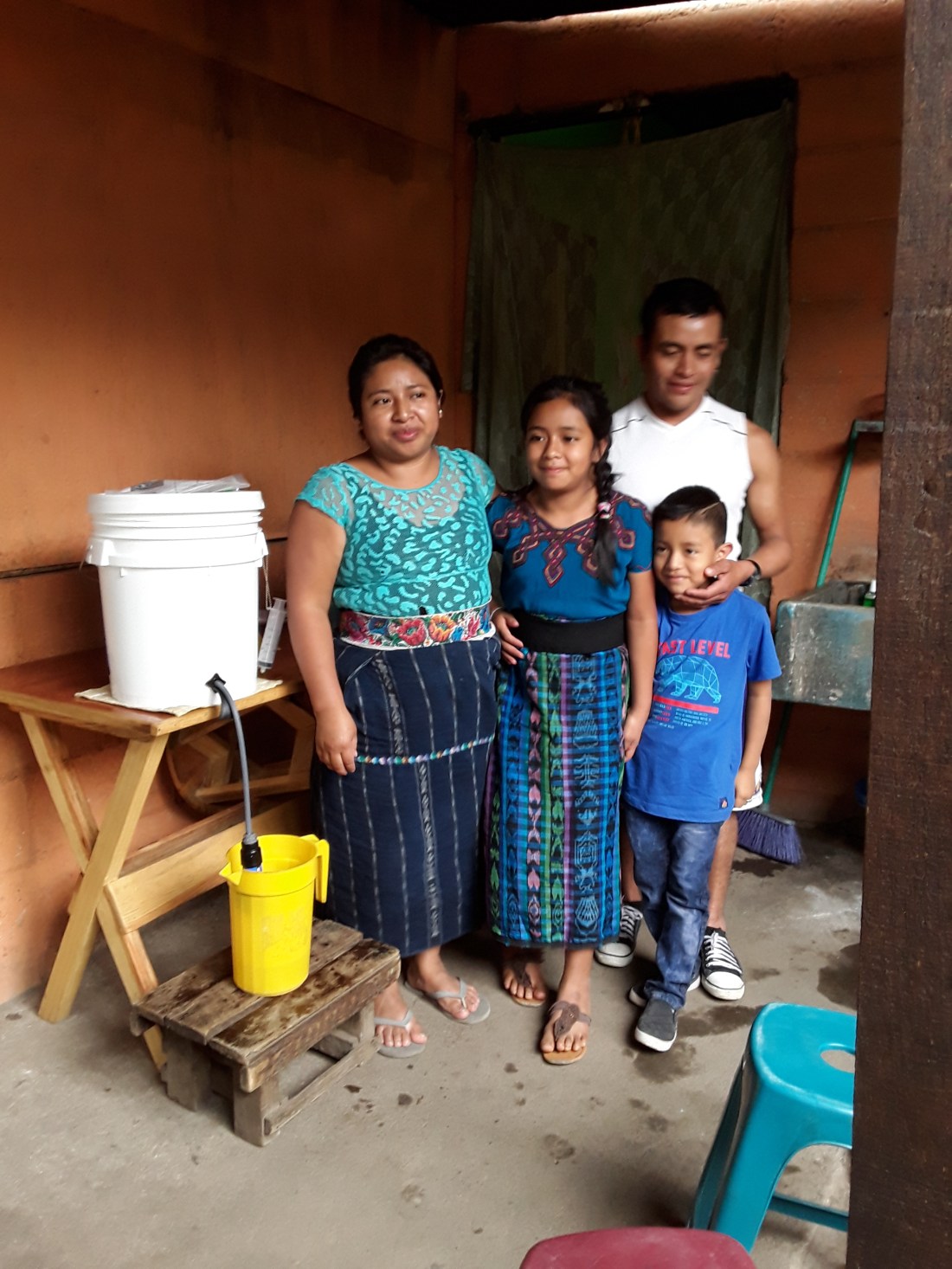
Some of our number arose very early on our last morning to see El Fuego spew flames and smoke into the dawn. As everyone finished packing and assembled for breakfast, we presented water filters to Nury’s staff, who had fed and served us faithfully all week. As we had begun the week celebrating Annette’s birthday, we ended it with birthday cake for Ron. Then, with hearts as full as our suitcases, we started our jouney home.
 Agua y Fuego (Water and Fire)